 By admin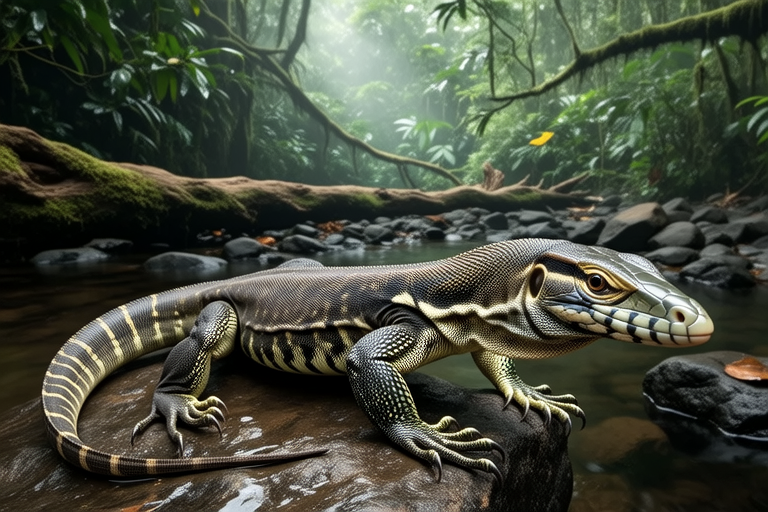
Beyond the Reptile Tank: Discovering the Wild Life of the Majestic Water Monitor
The water monitor (Varanus salvator) is one of the most impressive reptiles on Earth, known for its size, agility, and adaptability. This article delves into the natural habitat, behaviors, diet, and conservation status of this remarkable creature, contrasting their life in the wild with that in captivity. We’ll explore their physical adaptations and social interactions, highlighting why these animals are truly majestic.
Natural Habitat
Water monitors are native to Southeast Asia, ranging from India and Sri Lanka through Bangladesh, Myanmar, Thailand, Malaysia, Indonesia, and parts of the Philippines. They inhabit diverse environments, including mangrove swamps, rivers, lakes, and coastal areas. Their preference for wetlands and proximity to water bodies makes them excellent swimmers, capable of diving up to 45 meters deep and remaining submerged for up to 30 minutes.
These lizards thrive in tropical and subtropical regions with high humidity levels. They are often found near human settlements, which can lead to conflicts as they search for food in trash bins or gardens. However, despite their adaptability, the destruction of natural habitats due to deforestation and urbanization poses significant threats to their survival.
Diet and Feeding Behavior
Water monitors are opportunistic feeders, consuming a wide variety of prey items, including insects, fish, crustaceans, amphibians, birds, small mammals, and even carrion. They are adept hunters, using their keen sense of smell and sight to locate prey. In the wild, they play a crucial role in maintaining ecosystem balance by controlling populations of smaller animals.
In contrast, captive water monitors may exhibit different feeding behaviors. While they still consume similar foods, their diet is typically more controlled and less varied. Captive environments cannot replicate the vastness of their natural habitat, limiting the range of prey available to them. This difference highlights the importance of understanding and preserving their natural environment to ensure the health and well-being of these magnificent creatures.
Physical Adaptations
Water monitors possess several unique physical features that enable them to thrive in their diverse habitats. They have long, muscular tails used for swimming and balance, strong limbs for climbing trees, and sharp claws for digging and grasping. Their skin is covered in tough scales that protect them from predators and harsh environmental conditions.
One of the most fascinating aspects of water monitors is their ability to change color. This adaptation allows them to blend into their surroundings, making it easier to ambush prey or avoid detection by larger predators. Additionally, their eyes are positioned on top of their heads, providing them with a wide field of vision, which is particularly useful when hunting in dense vegetation.
Social Interactions
Contrary to popular belief, water monitors are not solitary animals. While they spend much of their time alone, they do interact with other monitors, especially during mating season. Males engage in combat to establish dominance, while females lay eggs in communal nests. These interactions demonstrate the complex social structure within water monitor populations.
Observing water monitors in captivity can be misleading regarding their social behavior. The confined spaces of enclosures limit opportunities for interaction, leading to the misconception that they are solitary creatures. In reality, they are highly social animals that rely on each other for reproduction and protection.
Conservation Status
Despite their widespread distribution, water monitors face numerous threats to their survival. Habitat loss, illegal pet trade, and overhunting for their meat and skins have led to population declines in many areas. Conservation efforts are underway to protect these animals and their habitats, but much work remains to be done.
Efforts to conserve water monitors include establishing protected areas, promoting sustainable land-use practices, and raising awareness about the importance of these animals in their ecosystems. By supporting these initiatives, we can help ensure the continued existence of this majestic species.
Life in the Wild vs. Captivity
The differences between life in the wild and captivity are striking. In the wild, water monitors enjoy vast territories where they can hunt, swim, and bask in the sun. Their natural environment provides endless opportunities for exploration and interaction with other animals. In contrast, captive environments, no matter how spacious, cannot fully replicate the complexity and richness of their natural habitat.
Captive water monitors often exhibit stereotypic behaviors, such as pacing back and forth or repeatedly rubbing their snouts against enclosure walls. These behaviors indicate stress and boredom, which can negatively impact their health and well-being. Providing enrichment activities, such as hiding places, climbing structures, and puzzle feeders, can help alleviate some of these issues but cannot completely compensate for the lack of natural stimuli.
Fascinating Facts
Water monitors are among the largest lizards in the world, with males reaching lengths of up to 3 meters. They have powerful jaws capable of delivering a painful bite, and their saliva contains bacteria that can cause infections. Despite their formidable appearance, water monitors are generally non-aggressive towards humans unless provoked.
Another interesting fact about water monitors is their ability to detect vibrations in the ground, which helps them locate prey hidden underground. This adaptation, combined with their keen senses of smell and sight, makes them efficient hunters.
Conclusion
The water monitor is a remarkable animal with many fascinating characteristics. From their natural habitat to their physical adaptations and social interactions, there is much to learn and appreciate about these creatures. By understanding and protecting their environment, we can help ensure the continued existence of this majestic species. Whether observed in the wild or in captivity, water monitors remain a source of wonder and inspiration for all who encounter them.