 By admin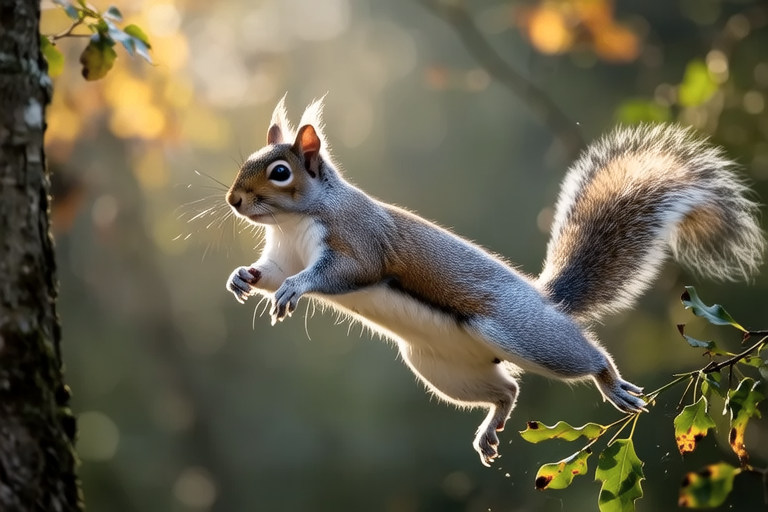
Meet Your Neighborhood Acrobats: Captivating Photos and Facts About Squirrels
Squirrels are common yet fascinating neighborhood inhabitants known for their agility and acrobatic skills. These small mammals can be found in parks, gardens, and woodlands all over the world. Despite their ubiquity, squirrels possess a number of unique traits that make them both intriguing and essential components of local ecosystems. From their impressive physical attributes to their intricate social behaviors, there is much to learn about these charming creatures.
Facts Section
Physical Characteristics
Squirrels are generally small rodents with bushy tails and sharp claws. They have large eyes that help them spot predators from a distance. Their fur can range in color from gray to red to black, depending on the species. For example, the eastern gray squirrel (Sciurus carolinensis) is one of the most common species in North America, while the red squirrel (Tamiasciurus hudsonicus) is more prevalent in northern regions. The Indian giant squirrel (Ratufa indica), native to parts of India, is an exception with its tri-colored coat – brown, orange, and white. Squirrels have strong hind legs that allow them to leap great distances, often up to several meters, and their sharp claws enable them to climb trees with ease. Additionally, their long, furry tails serve multiple purposes: they act as a counterbalance during leaps, provide warmth in colder months, and can even be used as a signaling device when communicating with other squirrels.
Diet and Eating Habits
The majority of a squirrel’s diet consists of nuts, seeds, fruits, and fungi. However, some species also consume insects and small vertebrates. Squirrels have a habit of hoarding food for winter, burying it in caches throughout their territory. This behavior not only ensures their survival during lean times but also plays a crucial role in forest regeneration by inadvertently planting seeds. When foraging, squirrels use their keen sense of smell to locate buried caches. They also display remarkable dexterity when handling food, often holding it between their paws before consuming it. In urban environments, squirrels may take advantage of human-provided food sources, such as bird feeders or garbage cans, though this can sometimes lead to conflicts with other wildlife or humans.
Behavior and Communication
Squirrels are highly active during the day and spend much of their time searching for food or maintaining their territories. They nest in tree cavities, leaf nests, or burrows, depending on the species and availability of resources. Leaf nests, also known as dreys, are constructed using twigs, leaves, and moss, and can be quite elaborate. Squirrels communicate through vocalizations, body language, and scent marking. They emit high-pitched chirps or barks to warn others of potential dangers or to assert dominance. Tail flicks and postures are used to convey messages, while scent glands located near their mouths and on their tails leave chemical signals for other squirrels to detect. Social interactions among squirrels can vary; some species live in monogamous pairs or family groups, while others are more solitary. Despite these differences, all squirrels exhibit territorial behavior, defending their feeding grounds against intruders.
Unique Abilities
Squirrels are renowned for their exceptional jumping abilities, capable of leaping distances up to 10 feet or more. Their powerful hind legs and flexible bodies allow them to navigate obstacles with ease, whether it’s jumping from branch to branch or crossing open spaces. Climbing is another key skill, with squirrels able to ascend vertical surfaces and traverse narrow branches with grace. Some species, like the flying squirrel, have flaps of skin between their front and back legs that allow them to glide through the air for short distances. This adaptation helps them escape predators or reach food sources quickly. In addition to their physical prowess, squirrels possess an excellent memory, enabling them to recall the locations of their hidden caches after long periods of time. This cognitive ability is particularly useful during autumn when they prepare for winter by storing vast quantities of food.
Photos Section


Conclusion
Squirrels play a vital role in local ecosystems by dispersing seeds, controlling insect populations, and serving as prey for larger predators. Their presence enriches our understanding of nature and adds beauty to our surroundings. Encouraging readers to observe these acrobats in their natural habitats fosters appreciation for the biodiversity around us and promotes responsible stewardship of the environment. Whether watching them forage, play, or rest, there is always something new to discover about these captivating creatures.