 By admin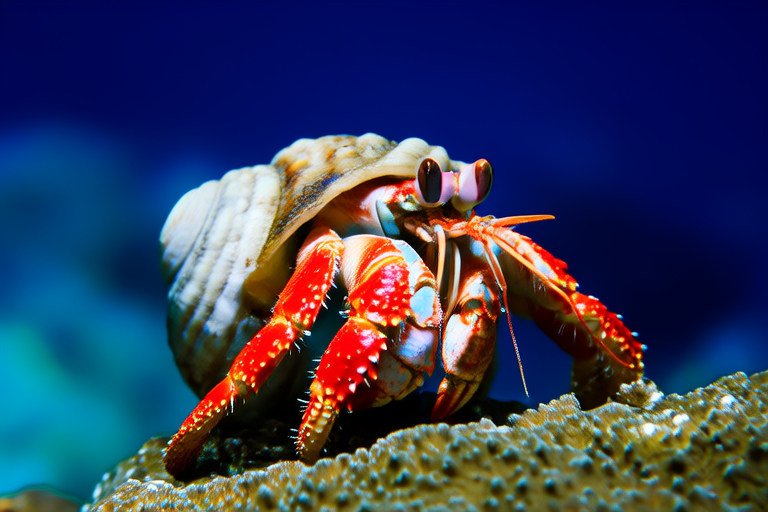
5 Surprising Facts About Hermit Crabs That Will Amaze You
Hermit crabs are among the most unique creatures in the ocean. Unlike other crabs that grow their own shells as they mature, hermit crabs rely on empty seashells for protection. This dependence on second-hand homes has led to some fascinating evolutionary adaptations and behaviors that make them truly remarkable. From their complex social structures to their surprising longevity, hermit crabs have much more to offer than meets the eye. Dive into the world of these shell-dwelling crustaceans and discover five surprising facts that will amaze you.
Fact 1: The Shell Swap Ceremony
One of the most intriguing aspects of hermit crab life is their shell-swapping behavior. As hermit crabs grow, they outgrow their current shells and must find new ones. This process can be quite competitive and ritualistic. When a suitable shell becomes available, smaller hermit crabs form a line, each waiting its turn to move into the larger shell. Once the largest crab claims the new home, the others quickly move up the line, each taking the next biggest shell. This shell swapping ceremony is crucial for their survival, as the correct shell provides protection from predators and harsh environmental conditions.
Scientists have observed that hermit crabs are selective about the shells they choose. They prefer shells that fit snugly and allow for easy movement. Interestingly, hermit crabs have been known to decorate their shells with algae and other materials, which not only camouflages them but also helps in maintaining moisture levels within the shell.
Fact 2: Social Creatures in a Solitary World
Despite their solitary appearance, hermit crabs are surprisingly social animals. They often live in large groups, sharing resources and even working together to find new shells. These gatherings are not just about survival; they are also essential for reproduction. Hermit crabs mate by releasing their eggs into the water, where they develop into larvae before settling back onto the ocean floor as tiny hermit crabs.
Hermit crabs communicate through a series of chirps and body movements. These signals help them coordinate activities such as finding food or avoiding danger. In fact, hermit crabs have been observed using their antennae to ‘taste’ the air, detecting chemical signals from other crabs. This form of communication allows them to establish dominance hierarchies within their communities, ensuring that the strongest crabs get the best shells.
Fact 3: Adaptation to Land and Sea
Hermit crabs are one of the few species that can thrive both on land and in the sea. While many hermit crabs spend most of their lives in the ocean, some species have adapted to life on land. These terrestrial hermit crabs have evolved specific traits to survive outside of the water, such as longer legs and the ability to retain moisture. Their gills have also adapted to function in low-oxygen environments, allowing them to breathe air when necessary.
The transition from aquatic to terrestrial life has presented hermit crabs with unique challenges. On land, they face threats from dehydration and predators that are different from those in the ocean. To combat these challenges, hermit crabs have developed a symbiotic relationship with certain plants. These plants provide shelter and moisture, while the hermit crabs contribute nutrients to the soil through their waste. This mutualistic relationship has allowed hermit crabs to expand their habitats and thrive in diverse ecosystems.
Fact 4: Longevity Champions
Hermit crabs are among the longest-lived invertebrates, with some species living up to 40 years. This impressive lifespan is attributed to their slow metabolism and the protective nature of their shells. The hard exterior not only shields them from physical harm but also helps regulate their internal temperature and moisture levels.
Research suggests that hermit crabs’ longevity may also be linked to their social interactions. Living in close-knit communities could provide them with increased protection from predators and access to better resources, contributing to their extended lifespans. Additionally, hermit crabs have been observed to exhibit signs of learning and memory, suggesting that their cognitive abilities might play a role in their survival strategies over long periods.
Fact 5: Unique Defense Mechanisms
Hermit crabs have developed several defense mechanisms to protect themselves from predators. One of the most notable is their ability to withdraw entirely into their shells. By doing so, they can shield their soft bodies from attacks. Another defense tactic involves using their claws to latch onto the shell’s opening, making it difficult for predators to pry them out.
In addition to physical defenses, hermit crabs have evolved behavioral strategies to avoid danger. For example, they are known to bury themselves in the sand or hide under rocks when threatened. Some species have even been observed forming defensive clusters, where multiple hermit crabs gather together to deter potential attackers. These collective efforts highlight the importance of community in hermit crab survival.
Conclusion: A Wonder to Explore
Hermit crabs are truly amazing creatures, full of surprises and adaptations that have allowed them to thrive in various environments. From their shell-swapping ceremonies to their complex social structures, these crabs offer a wealth of information for anyone interested in marine biology. Their ability to adapt to both land and sea, coupled with their impressive longevity, makes them a fascinating subject for study.
As we continue to explore the wonders of the natural world, hermit crabs remind us of the incredible diversity and resilience of life on Earth. Whether you’re a seasoned biologist or simply curious about the creatures that inhabit our planet, hermit crabs offer endless opportunities for discovery and awe. So, dive deeper into the world of hermit crabs and let their unique characteristics inspire your next adventure in marine biology.